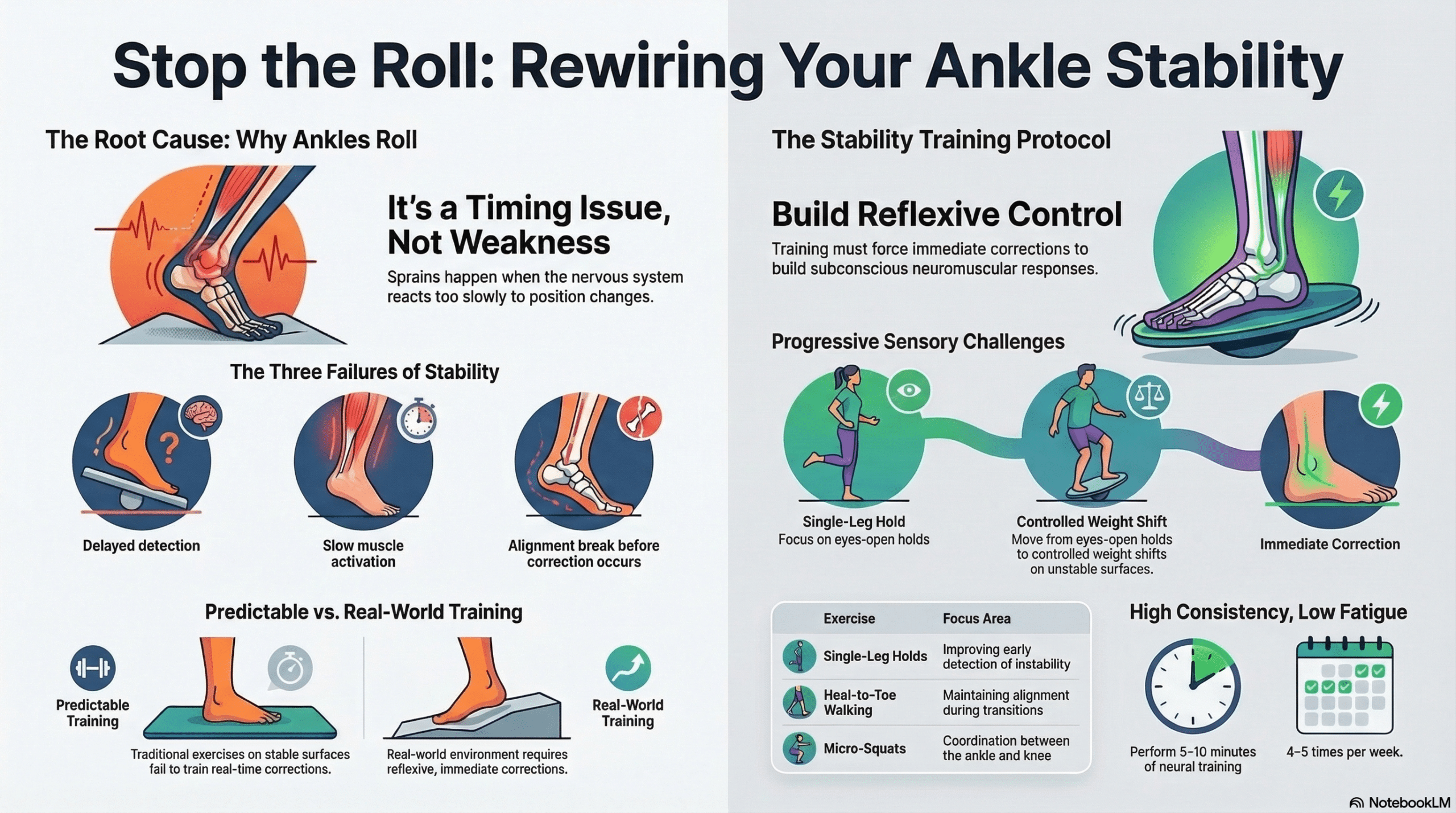
Most ankle sprains do not happen during extreme movement. They happen during normal movement — stepping off a curb, changing direction, shifting weight slightly off-center.
If your ankle keeps rolling, the problem is not strength. It is delayed response.
Why Your Ankle Keeps Rolling
Your ankle fails when it cannot react fast enough to a change in position. Three failures occur:
- Your body detects the shift too late
- Stabilizer muscles activate too slowly
- Joint alignment breaks before correction happens
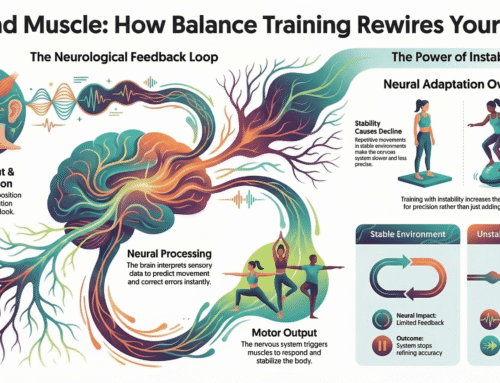
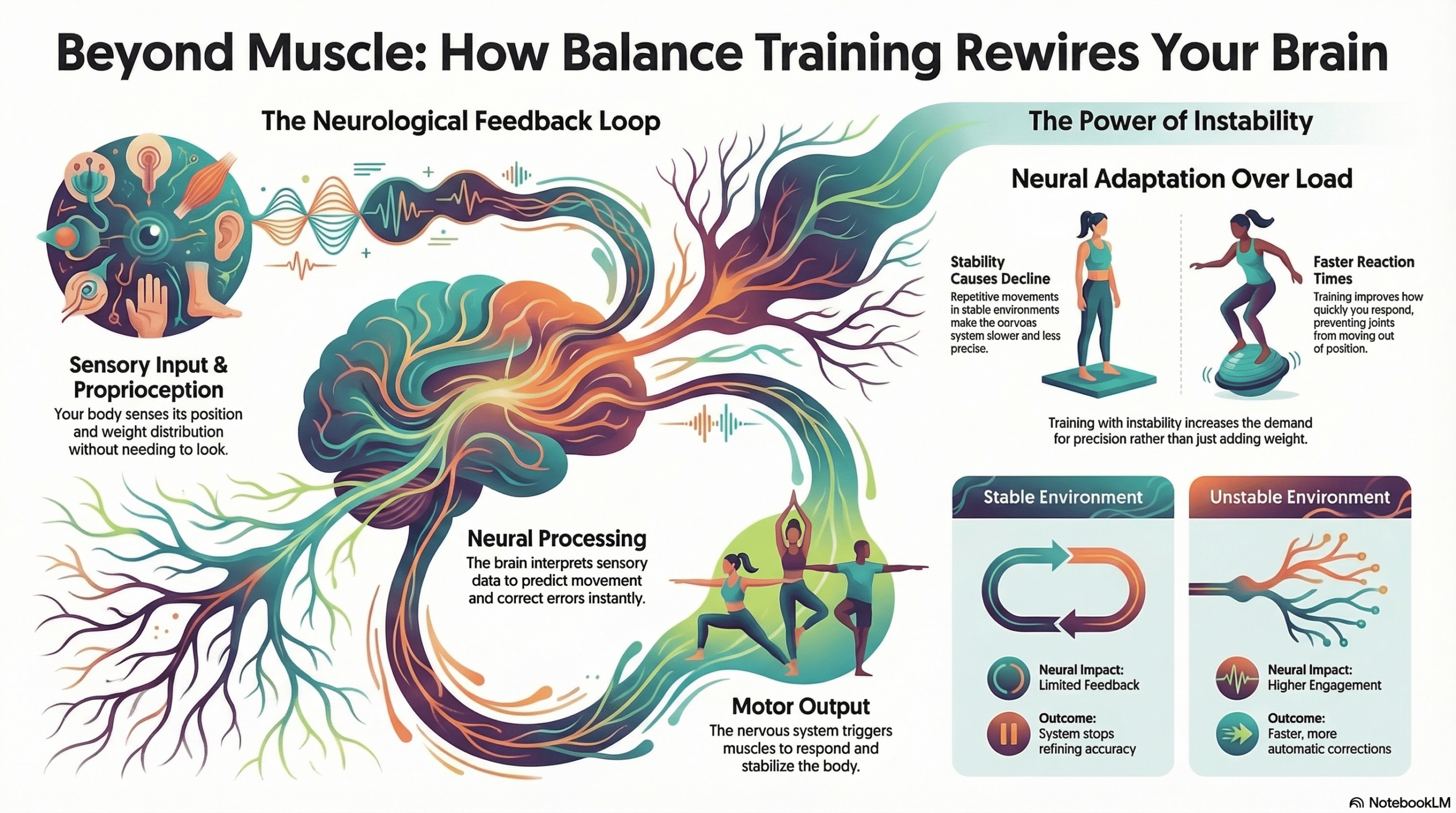
This is a timing problem inside the nervous system. Not a strength issue.
What Ankle Stability Actually Means
Ankle stability is the ability to:
- Detect position changes immediately
- Respond with precise muscle activation
- Maintain alignment under shifting load
This depends on proprioception, neuromuscular control, and coordination between the foot, ankle, and lower leg. If these are undertrained, the joint becomes unreliable.
Signs Your Ankle Lacks Stability
- Repeated ankle rolling
- Hesitation during movement
- Loss of control on uneven ground
- Wobbling during slow exercises
- Dependence on rigid shoes for support
These are not minor issues. They are early warnings.
The Real Cause Most People Miss
The ankle does not fail because it is weak. It fails because it reacts too late. Traditional training ignores this because movements are predictable, surfaces are stable, and speed is controlled. Your ankle is never forced to correct in real time. So it never learns.
Exercise 1 — Single-Leg Hold (Reaction Baseline)
Execution
- Stand on one leg
- Maintain control without excessive movement
Progression
- Eyes open → eyes closed
What This Fixes
- Improves early detection of instability
- Trains your ankle to recognize position changes faster
Exercise 2 — Controlled Weight Shifts (Response Timing)
Execution
- Shift weight slowly in all directions
- Keep movement controlled
What This Fixes
- Builds controlled response to shifting load
- Reduces delay between movement and correction
Exercise 3 — Heel-to-Toe Control (Alignment Under Motion)
Execution
- Walk in a straight line
- Place heel directly in front of toes
- Move slowly
What This Fixes
- Improves alignment during movement
- Trains controlled transitions between steps
Exercise 4 — Single-Leg Micro-Squats (Load Control)
Execution
- Stand on one leg
- Perform small, controlled bends
What This Fixes
- Trains the ankle to stay aligned under load
- Improves coordination between ankle and knee
Exercise 5 — Controlled Instability (Real-World Simulation)
Execution
- Stand on a slightly unstable surface
- Maintain control without excessive movement
What This Fixes
- Trains real-time correction
- Reduces the delay that causes ankle rolling
Where Equibalance Fits
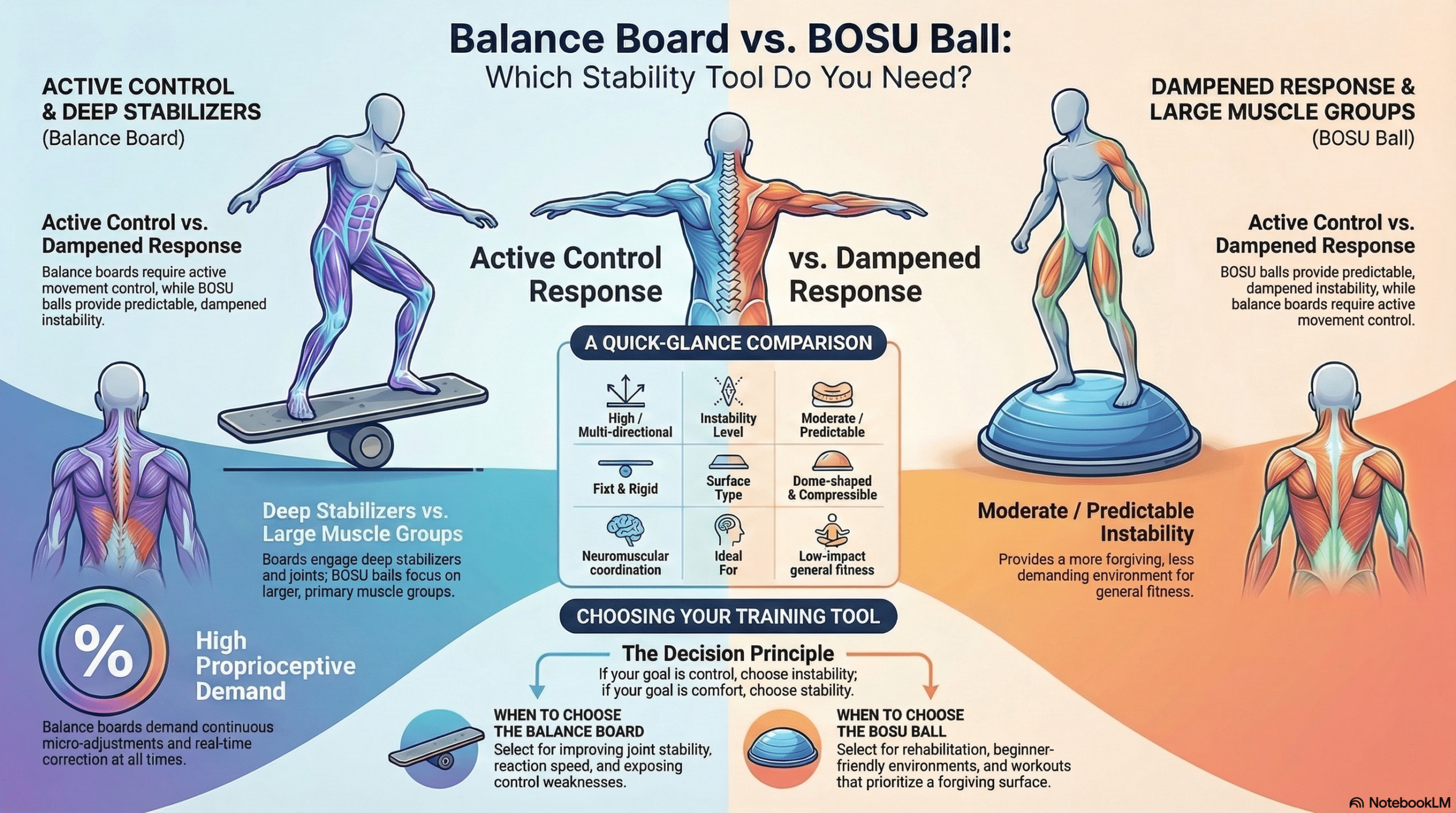
Flat surfaces do not expose when your ankle fails. They allow you to stay in control without needing to react. Equibalance removes that limitation.
It creates controlled instability that:
- Forces immediate correction when balance shifts
- Trains the exact reaction required during a misstep
- Improves response speed under load
- Builds reflexive control instead of conscious effort
This directly targets the mechanism behind ankle sprains.
How Often This Should Be Trained
- 5–10 minutes per session
- 4–5 times per week
Short exposure. High consistency. This is neural training, not fatigue-based training.
What This Does Not Replace
This is not treatment for acute injury. It is training that reduces the likelihood of failure before it happens. If you are recovering from a sprain, consult a physiotherapist before starting any instability training.