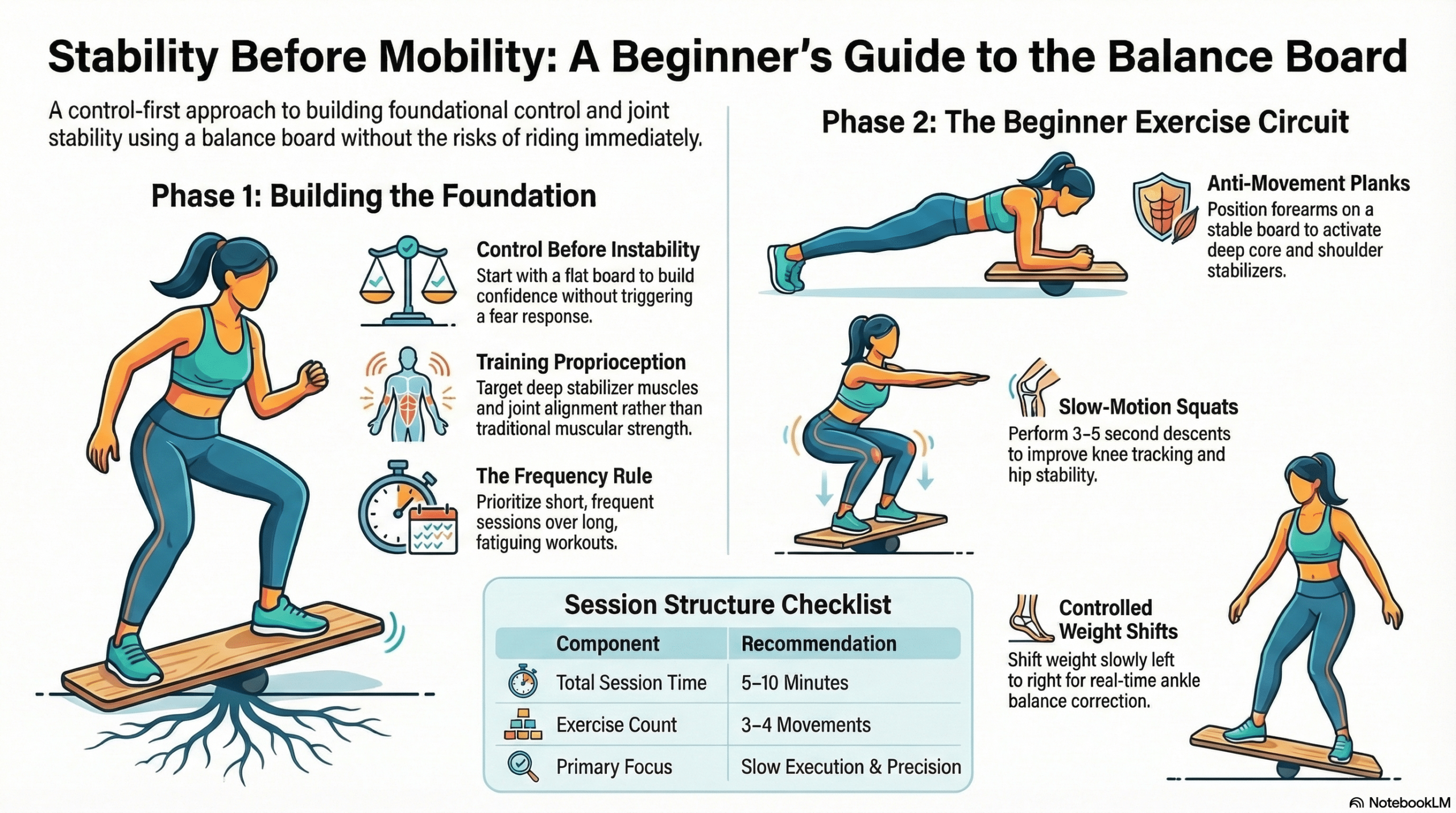
Most people avoid balance training because they assume it starts with standing on a moving board. That assumption is wrong. You do not begin with instability. You begin with control.
This guide covers exercises that build stability using a balance board — without riding it.
Why Start Without Riding?
Jumping straight into full balance creates two problems: loss of control and a fear response. Both reduce learning.
Early training should:
- Build joint stability
- Improve neuromuscular control
- Develop confidence under low risk
A flat or lightly unstable surface is enough to start.
What You Are Actually Training
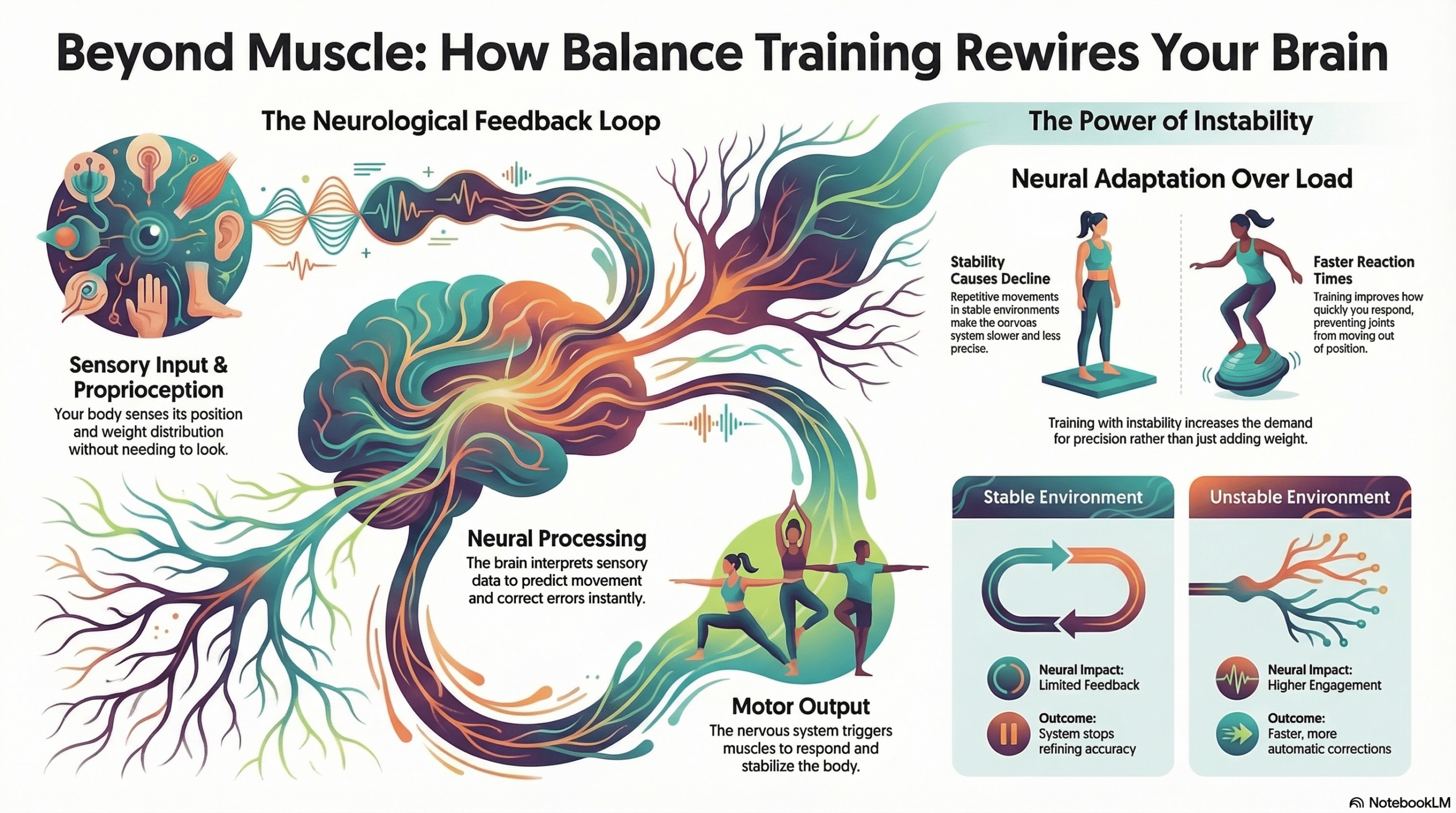
These exercises target stabilizer muscles, proprioception, core coordination, and joint alignment. This is not strength training in the traditional sense. This is control training.
Exercise 1 — Plank on Board
Setup
- Place the board flat or with minimal tilt
- Position forearms on the board
- Keep body in a straight line
Execution
- Hold the plank position
- Focus on preventing movement
What It Trains
- Deep core stabilizers
- Anti-movement control
- Shoulder stability
Exercise 2 — Push-Ups on Board
Setup
- Hands on the board
- Board kept stable or slightly moving
Execution
- Lower slowly
- Push up with control
What It Trains
- Upper body stability
- Shoulder joint control
- Coordination under load
Exercise 3 — Slow Squats (Board Flat)
Setup
- Stand on the board with it stabilized
- Feet shoulder-width apart
Execution
- Lower slowly (3–5 seconds)
- Maintain even weight distribution
- Rise with control
What It Trains
- Knee tracking
- Hip stability
- Balance under movement
Exercise 4 — Shoulder Stability Hold
Setup
- Hands on board in push-up position
- Arms extended
Execution
- Hold the position
- Minimize board movement
What It Trains
- Shoulder stabilizers
- Scapular control
- Upper body coordination
Exercise 5 — Controlled Weight Shifts
Setup
- Stand on the board
- Use support if needed
Execution
- Shift weight slowly left and right
- Keep movements small and controlled
What It Trains
- Proprioception
- Ankle stability
- Real-time balance correction
Common Mistakes to Avoid
- Moving too fast
- Chasing difficulty instead of control
- Letting the board move freely before you are ready
- Focusing on duration instead of precision
Progression depends on control, not intensity.
Where Equibalance Fits
Equibalance allows you to train at this level without forcing instability too early. It supports:
- Controlled flat positioning
- Gradual introduction of movement
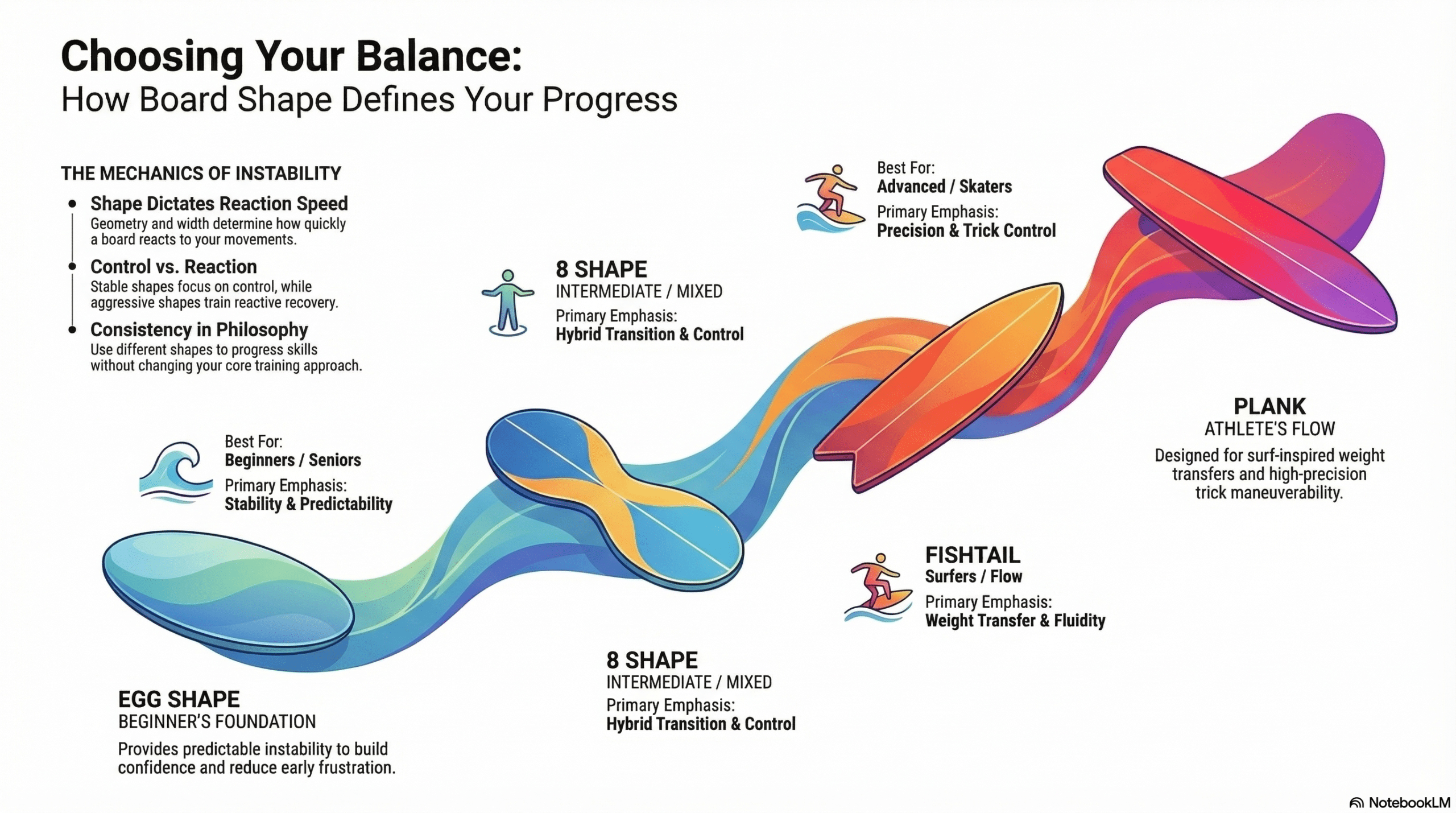
- Progression from stable to unstable
- Safe repetition without loss of control
This removes the barrier most beginners face.
How to Structure a Session
- 5–10 minutes total
- 3–4 exercises per session
- Focus on slow, deliberate execution
- Stop before fatigue breaks your control
Frequency matters more than duration. Short daily sessions drive faster neural adaptation than long infrequent ones.