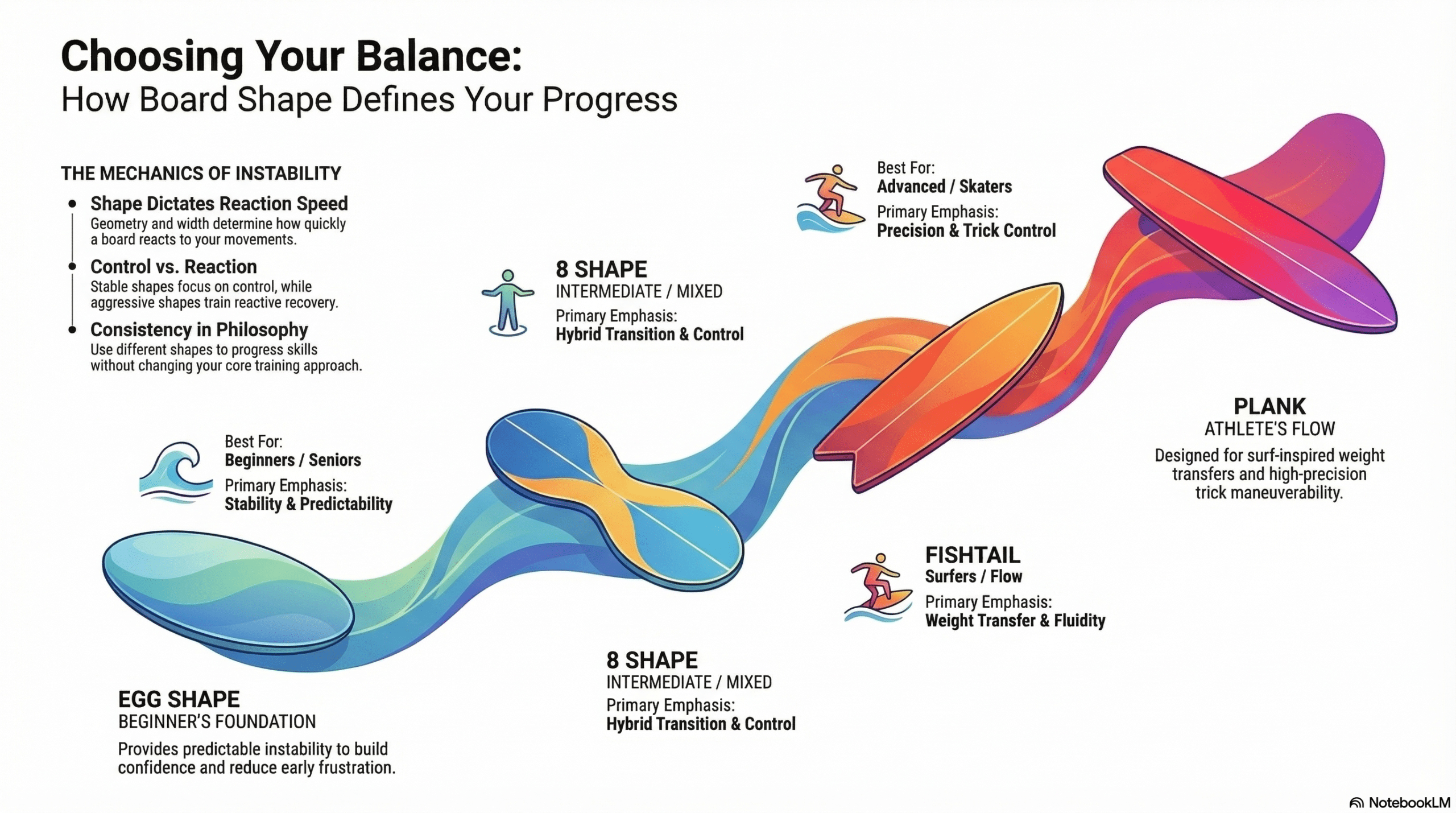
Most people focus on learning balance. They ignore the tool. Shape changes how instability is delivered — and that changes how your body learns. You can learn on any board. The difference is how efficiently you progress and what you emphasize.
Why Shape Matters
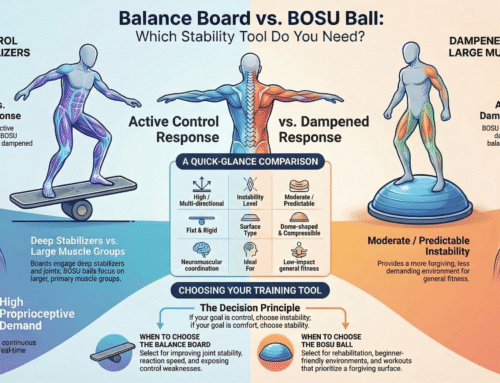
A balance board is not just unstable. It distributes instability differently based on surface width, contact points, edge geometry, and weight distribution. This determines how quickly the board reacts, how predictable movement feels, and how much control is required. Different shapes train different outcomes.
Egg Shape — Stability First
What It Emphasizes
- Controlled movement
- Predictable instability
- Gradual learning curve
Who It Fits
- Beginners
- Children
- Gym users, physiotherapists, and yoga practitioners
Advantage
The most stable entry point. Allows you to build confidence and focus on control instead of reaction, reducing early frustration.
Plank Shape — Trick-Oriented Control
What It Emphasizes
- Precision
- Directional control
- Trick-based movement
Who It Fits
- Skateboarders
- Advanced users
- Users focused on freestyle control
Advantage
Designed for movement, not stability. Allows for sharper transitions, controlled tricks, and higher maneuverability.
Fishtail Shape — Surf-Inspired Flow
What It Emphasizes
- Fluid movement
- Weight transfer
- Directional flow
Who It Fits
- Surf training
- Board sports users
- Intermediate progression
Advantage
Bridges stability and movement. Allows for smoother transitions and better weight distribution training.
8 Shape — Stability and Maneuverability Combined
What It Emphasizes
- Stability at endpoints
- Maneuverability through center
- Controlled transitions
Who It Fits
- Users progressing from beginner to intermediate
- Those wanting both control and movement
- Mixed training styles
Advantage
A balanced design. Allows for stable positioning when needed, easier transition into movement, and a controlled introduction to trick-based balance.
The Real Decision Factor
Shape does not determine whether you can learn. It determines how quickly you gain control, how much frustration you experience, and what type of movement you develop.
Where Equibalance Fits
Equibalance offers multiple shapes because balance is not a single skill. Each design targets a different stage or style:
- Egg → control foundation
- Plank → precision and tricks
- Fishtail → flow and movement
- 8 Shape → hybrid progression
This allows progression without changing your training philosophy.
Which Shape Should You Choose?
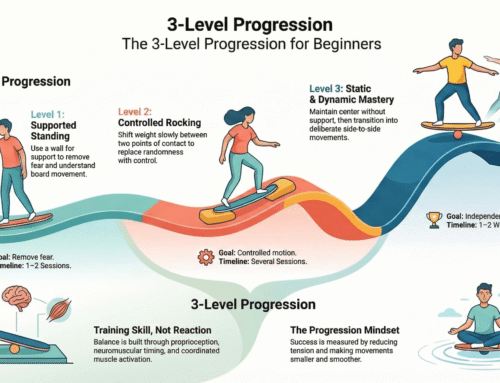
- No experience → Egg
- Want movement and tricks → Plank
- Want flow and a board-sport feel → Fishtail
- Want a mix of control and progression → 8 Shape
You do not learn balance from the shape. You learn through repetition. The shape determines how that repetition feels.